What AI gets wrong about your clients’ portfolios
In 2025, just 5% of investors named AI as a source of investment information, advice and guidance. In 2026, that number grew to 19%. For advisers and stockbrokers, that means more clients arrive with portfolio reviews, tax estimates and trade ideas that came from ChatGPT, Claude or Gemini.
In a recent webinar with the Stockbrokers and Investment Advisers Association (SIAA), Sharesight CEO Doug Morris ran 20 years of his own trading history through ChatGPT and compared its answers with his Sharesight reports. AI missed what was driving his returns, underestimated the impact of currency and got his taxable income wrong by thousands of dollars. The lesson for advisers is that AI is only as good as the question it’s asked and the data it can see.
Australians are already asking AI about their money
About 3 million Australians use AI to stay on top of their financial activity, and Gen Z are 8.4 times more likely to use it than baby boomers.
Doug noticed the shift in a Qantas lounge before a flight to New Zealand. Almost every person on a laptop, tablet or phone was using an AI chatbot, mostly ChatGPT. Not long ago they would have been in email, calendars and spreadsheets.
He’s seen it at home too. His partner took a screenshot of her portfolio in the Sharesight mobile app, uploaded it to ChatGPT and asked whether it was balanced and what she should top up or sell. She went on to make decisions about her ETF holdings based on its answers.
As Doug put it, "the horse has bolted". Investors are already collaborating with AI for investment decisions and for tax.
One portfolio, two prompts, two different answers
The answer you get from AI depends heavily on how you ask. Doug exported about 20 years of his trading history from Sharesight and gave it to ChatGPT in two separate sessions:
- A neutral prompt: "Please assess this portfolio."
- A leading prompt: "Here are the trades I've made in my investment portfolio. Do you think I have a good portfolio for high returns?"
The neutral prompt got a reasonable answer: a growth-oriented portfolio with a lot of diversification but also some significant concentration in a handful of positions. Then Doug told ChatGPT his own view, that the portfolio was well structured for long-term growth. It agreed with him.
The leading prompt called the portfolio a "strong foundation for long-term wealth creation" but said it "isn't currently constructed as an aggressive, high-return portfolio". Doug had asked about high returns, so ChatGPT judged the portfolio against that goal. For an investor, that reads as a nudge to take on more risk.
“If given a very good, objective prompt, AI is fantastic. But if you start to steer it in a certain direction, it’s just a sycophant. It’s going to agree with you. It’s going to reinforce the biases and opinions you already have.” – Doug Morris, Sharesight CEO
What Sharesight’s reports showed instead
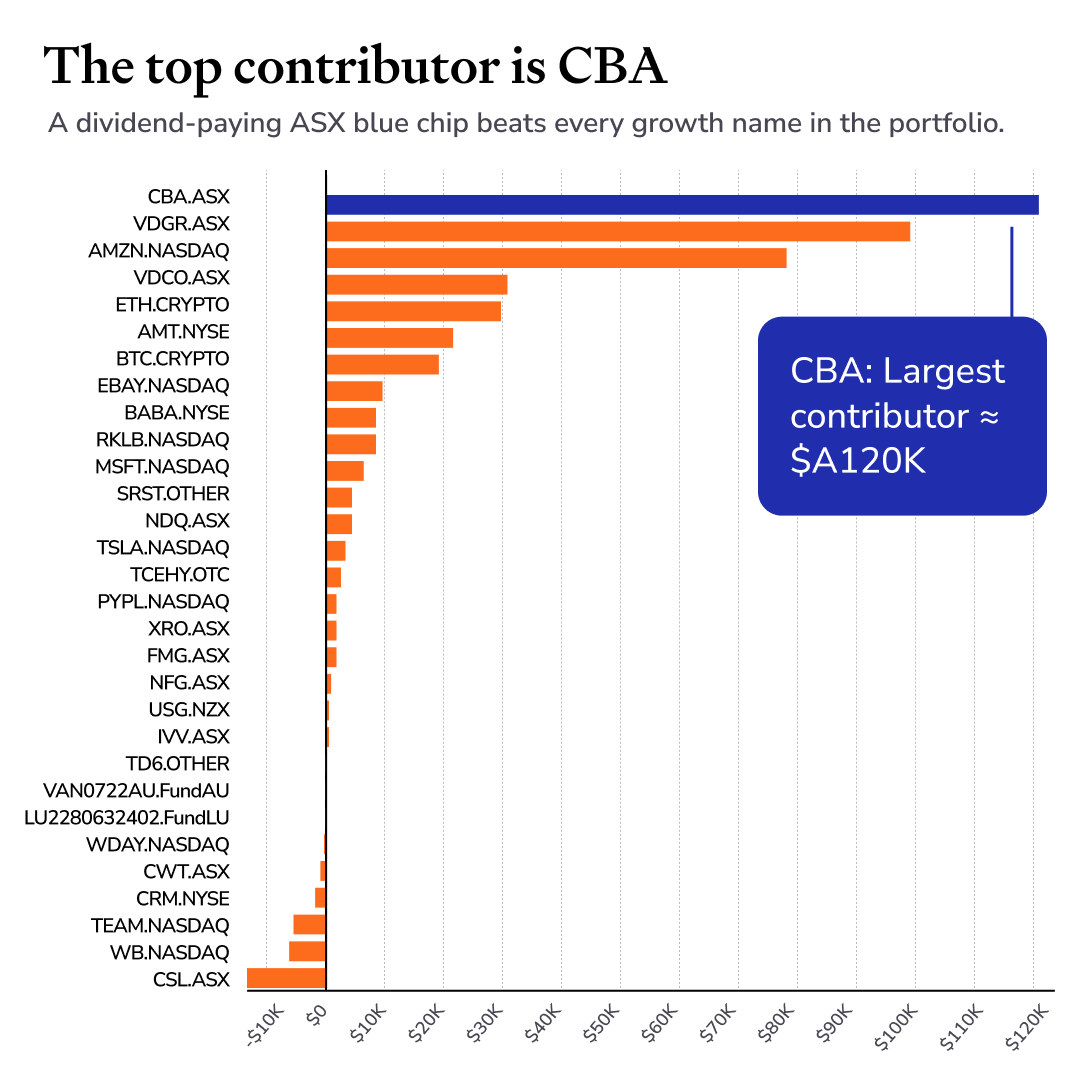
ChatGPT had Doug’s full transaction history, but none of the analysis built on top of it. Looking at the same portfolio, our contribution analysis report showed what was actually driving the portfolio's returns. CBA was the biggest contributor by a wide margin, helped by its dividends. The Vanguard Diversified Growth ETF (VDGR) came second, and Amazon (AMZN) third.
The drawdown risk report showed a large share of the portfolio in high-return, high-risk positions. One of them was Rocket Lab (RKLB), which ChatGPT named in its answer but never flagged as highly volatile.
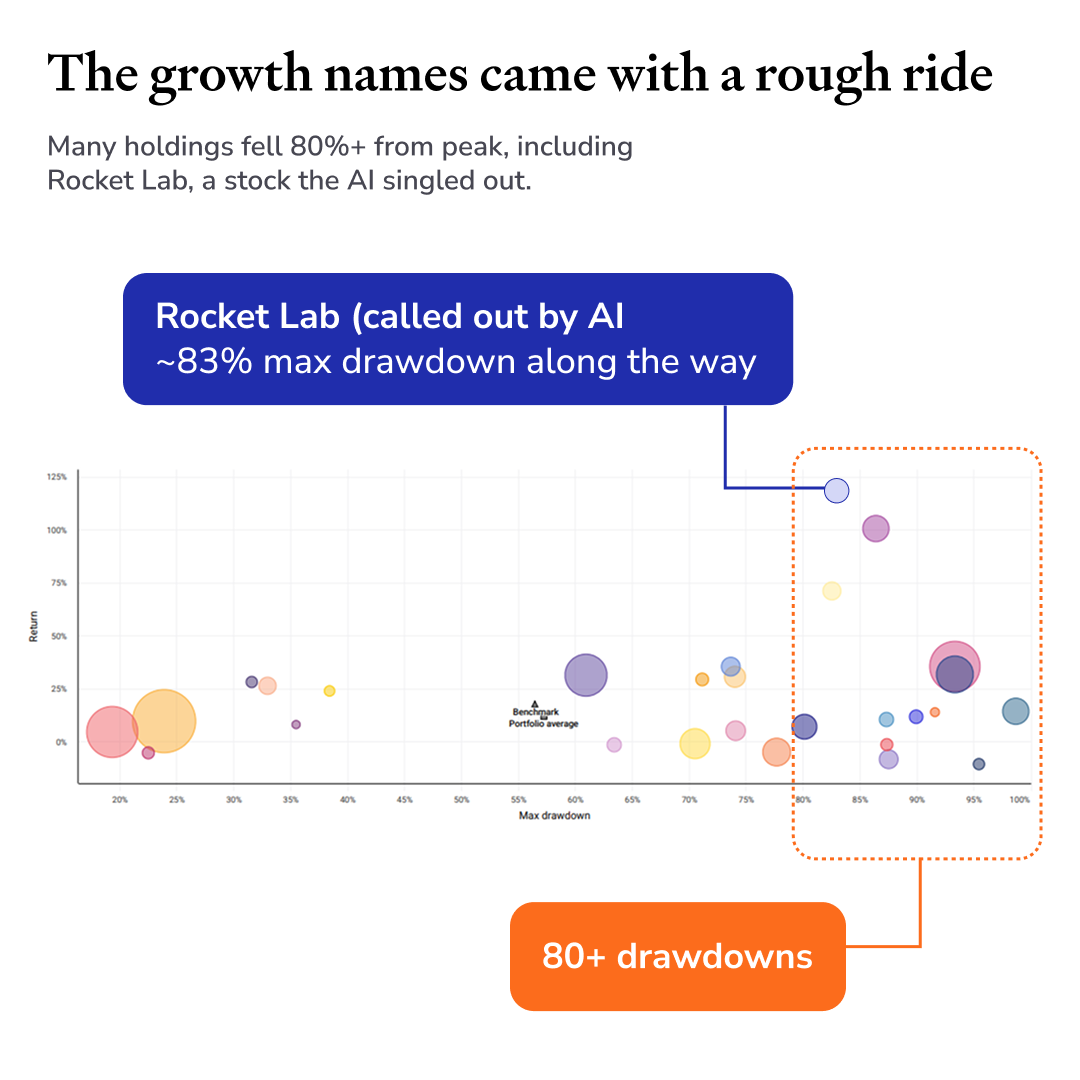
The risk is that clients come away with a surface-level read on their portfolio, with nothing underneath it explaining where the returns came from or how much risk sits behind them.
Where AI falls short on portfolio analysis
General-purpose chatbots like ChatGPT are good at summarising publicly available information. Portfolio analysis needs more than that. These are the gaps our customer support team sees most often:
- Outdated information: A chatbot can be working from a view of the internet that's weeks or months old, and markets can move on a single interest rate decision.
- Corporate actions: Mergers, splits and other corporate actions change a portfolio's history, and chatbots don’t reliably account for them.
- Price return vs total return: Chatbots tend to cite price data from sources like Yahoo Finance and don’t calculate total returns that include dividends.
- Currency: Returns on international shares depend on the exchange rate. In one of Doug’s tests, ChatGPT put his US tech exposure up 8%. After currency, Sharesight showed it was about 3%.
- Tax: When Doug asked for his taxable income, ChatGPT left out his CBA dividends and all of his foreign dividends, even though both were in the export he gave it.
- Hallucination: Chatbots still make things up from time to time.
- No access to proprietary data: Unless it’s connected to the right data providers, a chatbot can't see your client’s actual holdings or licensed data.
That last point explains many of the others: dividend and distribution data is usually licensed rather than free, so a general-purpose chatbot often doesn’t have it. It’s also the gap MCPs are built to close.
How to respond when a client brings AI into the room
You can't stop clients using AI, and dismissing it won't help.
- Acknowledge it. Treat the client's AI research as a starting point for the conversation.
- Verify it. Reconcile the figures against a source of truth: live prices, full transaction history, corporate actions, currency.
- Add context. Explain what AI missed, such as why a price return differs from a total return, or why foreign dividends and currency matter.
- Document it. Keep a record of what the client brought, what you checked and what you advised. Doug expects regulators to take a closer interest in AI-generated information over time.
MCPs: Connecting AI to a source of truth
Model Context Protocol (MCP) servers are connectors that let an AI assistant read live data from another app. Ours (coming soon) connects your Sharesight account to your AI assistant. Instead of guessing from a pasted export or the public internet, the AI works from the same data as your Sharesight reports. It draws on performance, diversification and exposure data, but if you ask about tax, it points you to Sharesight's tax reports rather than generating an answer.
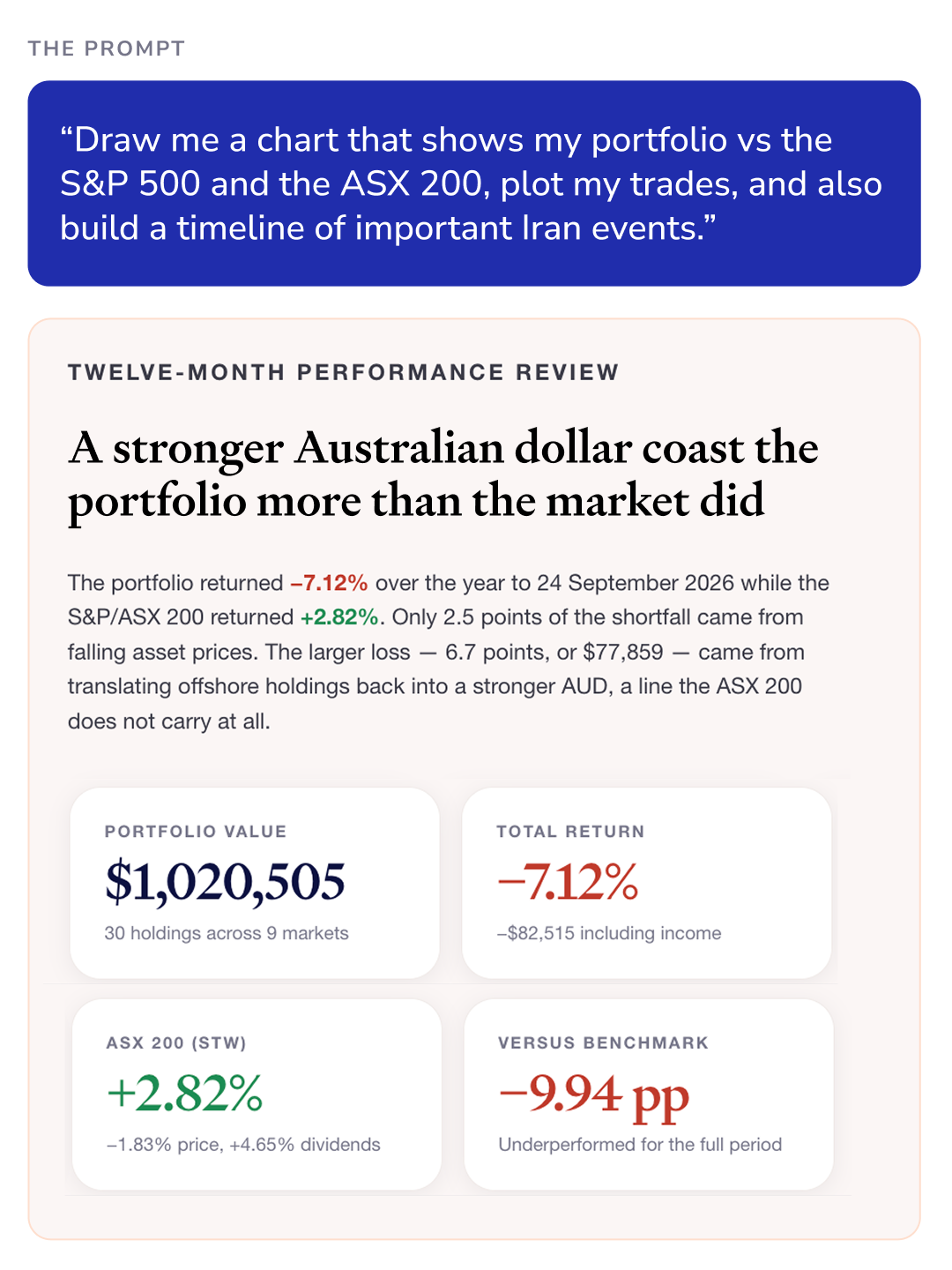
When Doug asked Claude, through the MCP, to write a story about his portfolio, it led with: "A stronger Australian dollar cost the portfolio more than the market did." Currency was one of the gaps in ChatGPT’s analysis. With access to his actual portfolio data, the AI put it first.
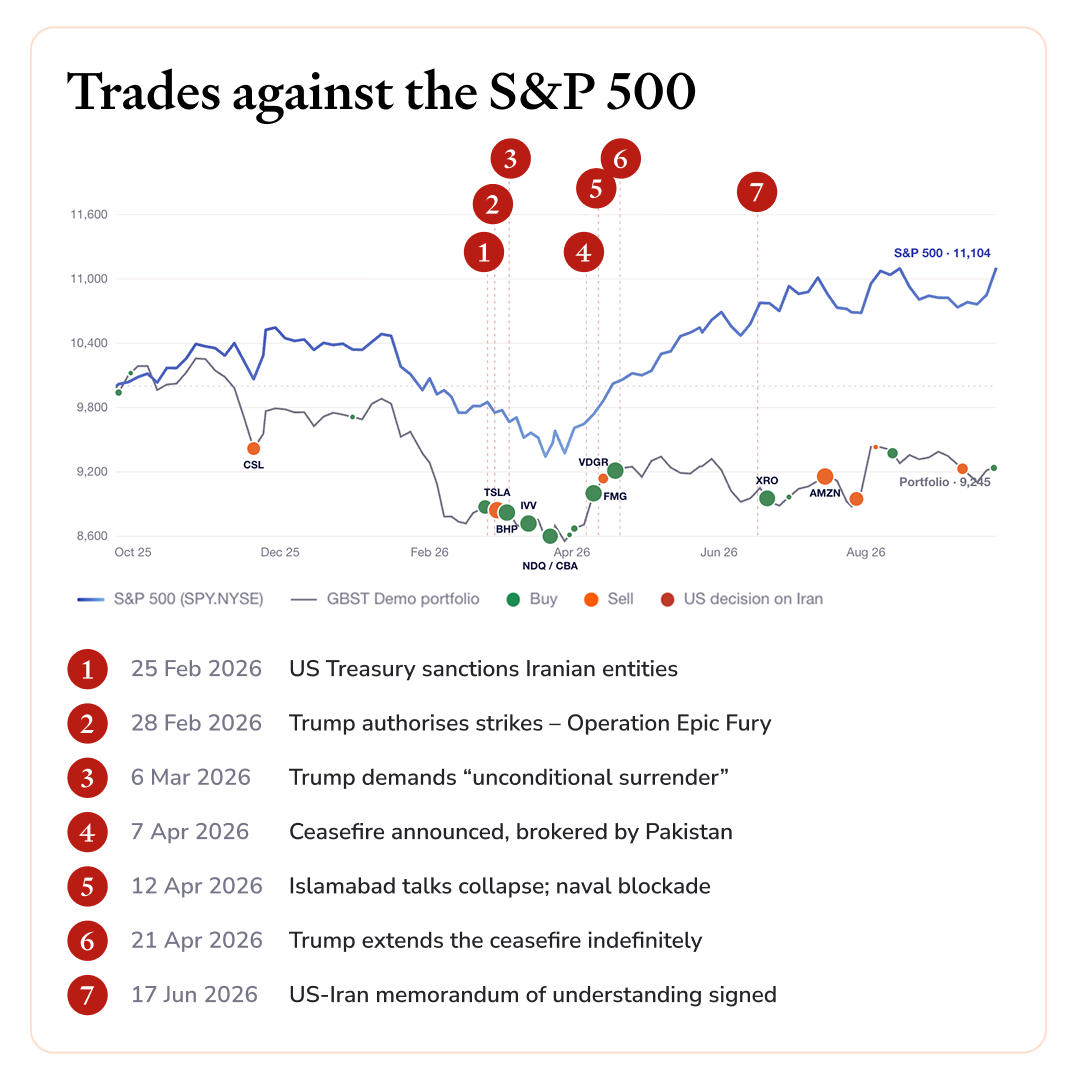
He also combined his Sharesight trades with public news to chart his buys and sells against the S&P 500, the ASX 200 and key events in the Iran conflict. That's the kind of question clients bring to advisers, answered with real portfolio data in minutes.
For advisers, the practical use is preparation. You can set up your AI assistant to use the Sharesight MCP to draft a portfolio summary for each client 24 hours before their meeting, then review and refine it yourself. Doug uses a similar setup to draft the skeleton of his board packs and says it saves him hours.
To see how the Sharesight MCP can elevate your practice, book a demo.


September top trades: Microsoft bounces back, Apple cools and New Zealanders keep buying
Microsoft buys rebounded, Apple fell from #2 to #12 and New Zealanders bought the most. See what Sharesight investors traded in September 2026.


Product updates - September 2026
See what’s up and what’s down at a glance with our new gains & losses toggle, and more product improvements. It’s all in Sharesight’s September update.


August top trades: Apple in, Microsoft out and Australians trade close to home
Deep dive into the shares, stock and ETFs Sharesight’s investors bought and sold through August 2026, and stay up with the latest share trading trends.